Eco-Literate Pedagogy
  • Blog
  • Dictionary
  • Music Lessons for a Living Planet (2024)
  • Eco-Literate Music Pedagogy (2017)
  • Classical
  • Songs for Eco-Literacy
    • Listening for Eco-Literacy
    • Choir for Eco-Literacy
    • Band for Eco-Literacy
    • School Orchestra for Eco-Literacy
    • Pieces my Students Brought to my Attention
  • Relevant Music Education Articles
  • Relevant Internet Sites
  • Lessons
  • Philosophical Statement
  • Eco-Literate Music Pedagogy (2017)
  • Recent Presentations and Papers

Place-conscious music education theory

1/6/2023

0 Comments

 
Picture
Post 116.
 
Place-conscious educational theory made its way into music education scholarship through the work of Sandy Stauffer and Vince Bates. Both draw extensively form Gruenewald’s critical place-conscious scholarship, but both have meaningful differences from one another. These differences might emerge in what is emphasized by each, and what is de-emphasized or even ignored. Stauffer’s place-conscious theory focuses the social, highlighting especially aspects of human narrative. Places become places through storytelling. This is true.

            In contrast, Bates’s place theory emphasizes land. Places are both social and geographical. This also is true. This line of thinking has opened space for more ecological discourse in music education scholarship, including my own—listening for not just human stories, but also the experiences of non-human animals, as well as non-biogenic elements of place, such as weather, land-formations, and waterways.

            Gruenewald’s seminal theory isn’t the first word on place-conscious education. It drew on a large body of scholarship emerging in various fields; scholars that were already analyzing “place,” including those identifying with various scholarly fields: democratic education, outdoor education, indigenous knowledge systems, environmental education, and critical pedagogy. It is easy to see how Stauffer’s emphasis on storytelling synchronizes well with the traditions of democratic education, indigenous knowledge systems, and critical pedagogy. In comparison, Bates’s emphasis on land synchronizes well with outdoor education, indigenous knowledge system, and environmental education. Some fields, like critical pedagogy, have historically been resistant to ecological elements; but have done better in recent years. For instance, “A People’s Curriculum for the Earth” draws on indigenous knowledge system scholars like Vandana Shiva and others to present a ecological-critical pedagogy. These fields aren’t naturally separated into boxes. Disciplines are social constructions, made for our ease of use. Not natural. But in the 1980s, 90s (and early 2000s) when indigenous scholars called on Paulo Friere to recognize the ecological elements of oppression, he may not have done so, but some of his disciplines, students and students’ students have.

            So, what does this mean for music educators and music education scholars? For me, it means that both storytelling and land need to emphasized in critical place-conscious teaching and learning. For instance, both can be used as ways to cross the school-community border, inviting elders of local cultures into the classroom, inviting in the musics of non-human life, taking students to natural areas, and dealing with the real oppressions experienced today—many of which have ecological implications and roots.

Both/and, and not either/or.
 
ds

Image


0 Comments

Trees talk. Trees sing.

12/19/2022

0 Comments

 
Picture
Post 115.
Trees talk. Trees sing.

            What I mean when I say is that trees, in some way, converse with one another. The German forester, Peter Wohlleben, wrote a successful book (“Hidden Life of Trees: What they Feel, How they Communicate”) on the interconnected lives of trees living in a woodland. (https://www.smithsonianmag.com/science-nature/the-whispering-trees-180968084/) “Trees are far more alert, social, sophisticated—and even intelligent—than we thought.” Using evocative language, Wohlleben discusses “two massive beech trees growing next to each other. … ‘These two are old friends,’ he says. ‘They are very considerate in sharing the sunlight, and their root systems are closely connected. In cases like this, when one dies, the other usually dies soon afterward, because they are dependent on each other.’”

            Trees are communal, forming alliances with plants of the same and different species, evolving interdependently, and communicating through what some call “the Wood-Wide-Web,” using chemical and hormonal signals sent through networks of mycorrhizal fungi belowground; sending distress signals, using the network to “suckle their young” growing nearby, and sharing nutrients, and are even (observing a huge stump felled at least 4 centuries beforehand, green with chlorophyll) “reluctant to abandon their dead, especially when it’s a big, old, revered matriarch.”

            Trees also communicate through air, using pheromones, such as when, in the savannas of sub-Saharan Africa, the wide-crowned umbrella thorn acacia sends out ethylene gas to notify nearby trees of feeding giraffes. And giraffes in some way know the trees are talking to one another, sensing the wind to decide which direction to walk, and how far, before grazing on another acacia.

            The natural world is brilliant. Non-human life is brilliant.

            A music lesson idea:
After learning how trees communicate, direct students to close their eyes and imagine they’re using an under-earth network of fungi, or the winds in the air to communicate with one another. Invite them to sing pitches—a wordless song of a tree—communicating wellbeing, or distress, communicating nourishment, concern, and/or love. Record the song and play it back for students. They may choose to learn some of the parts they improvised, or create new drones, melodies and harmonies on additional attempts at improvising the woodland. After doing a series of these improvisations, a composition might emerge, and students can be directed to add movement. How would a forest dance? They can take this prompt literally or take creative license. What visual art might the class create? Would they create backdrops? Masks and costumes? Would they create a poem or a narrative? A play?

Perform their composition of a living, communicating woodland for the community, making them aware of the fullness of tree-life, and challenging development projects that needlessly fell trees.

            There are several such projects going on in my own community now.

DS
 
Link to image: https://commons.wikimedia.org/wiki/File:Giraffe_koure_niger_2006.jpg


0 Comments

Cultivating Coral Reef Ecoliteracy in Elementary General Music

12/14/2022

0 Comments

 
Picture
Post 114.

New research from Tel Aviv University and the Interuniversity Institute for Marine Sciences in Eilat found plastic additives were disruptive to the larval development of corals and other coral reef organisms in Eilat. (https://www.sciencedaily.com/releases/2022/11/221129112701.htm) The Eilat Coral Beach Nature Reserve offers an important site of recreation and ecology in Israel. While this (and many reefs) offer scuba divers access to natural beauty of a reef ecosystem, Eilat offers (human) visitors access to Wading pools, bridges for observing the reef, and other lookouts for observing wildlife. (https://en.parks.org.il/reserve-park/eilat-coral-beach-nature-reserve-2/) Coral reefs actually create their own music, which is analyzed by scientists to understand how healthy these ecosystems are. (https://www.syfy.com/syfy-wire/scientists-trained-ai-to-listen-to-reef-songs) In my book, I suggest experiences with the beauty of non-human life provides opportunities for students to cultivate ecoliteracy—the critical understanding of the non-human world, interactions between humans and non-human animals, plants, and places, and insight into ways to challenge the ecological crises we face as beings of Mother Earth.

            Ocean plastics produce a distinct ecological crisis. As of 2021, there were at least 363,762,732,605 pounds of plastic pollution in the oceans, including at depths of 11 km. (https://www.earthday.org/fact-sheet-plastics-in-the-ocean/) No part of the oceans, seas, lakes, and riverways have avoided our human-made plastic waste.

            The website, Childhood 101, shares “15 Under the Sea Rhymes, Finger Plays & Action Songs” that can be used in elementary schools. (https://childhood101.com/ocean-sea-rhymes-finger-plays-action-songs/) Songs and rhymes as common and uncommon as “Row, Row, Row Your Boat,” “I’m a Little Fish,” and “All the Fish” can be used in an elementary music classroom as is, or modified to increase student empathy-for and understanding of the ecological crises humans must begin to challenge and reverse. Here are some examples I modified from the Childhood 101 for this post:
 
Row, row, row your boat, gently downward gaze;
Sea anemones, corals, clownfish; turtles, starfish, and rays.
Row, row, row your boat, feet above the reef;
Take good care of the plastics we share, and give this this reef relief.
 
(To the tune of “I’m a Little Teacup”)
I’m a little fish o, watch me swim.
Here is my tail, and here is my fin.
Through the coral reef, who with me sings,
The melody of life joy brings.
 
All the fish are swimming in the water, swimming in the water, swimming in the water,
All the fish are swimming in the water, all day long.
Schools of fish are…
Watch the fish, they’re…
Save the fish, they’re…
Caring dolphins…
Peaceful turtles…
Cheeky lobsters…
Gently tread, we’re…

ds

Image: Eilat Dolphin Reef


0 Comments

An objection to ecoliterate music education.

12/13/2022

0 Comments

 
Picture
Post 113.
 
While the publication of my book five years ago has generated some alternative expansions of what it means to teach music for ecoliteracy, (such as by Vincent Bates, Tawnya Smith, Atillio Lafont di Niscia) there have not been explicit objections to the idea of teaching music for ecoliteracy. One objection, sort of, that was made explicit came from Lise Vaugeois’s 2019 review of the book. Vaugeois is a senior scholar whose long body of work on sociology, social justice, colonization, and institutionalization in our field speaks for itself. And Vaugeois has put money-in-the-mouth, as the saying goes, becoming active in Canadian election-politics. What an honor to have my book read and critiqued by a scholar whose voice I have long respected!

Vaugeois identifies the separation of the “cultural” from the “political” as problematic. Quoting page 91, this separation is described as “an unnecessary, and false dichotomy.” Discussing the example of corporations funding false science, Vaugeois continues, “it is not simply cultural misguidedness that is in play but a strategic use of misinformation designed to maintain control over existing concentrations of wealth and power.” I agree with Vaugeois 100%, that it is not “simply cultural misguidedness” but strategic, and political. If this dichotomy emerged in my book so strongly, I would agree wholeheartedly with this critique, and my book would need revision. However, I had not understood my writing as presenting an either/or dichotomy, but rather a political viewpoint understood through the lens of culture—where both exist, but that policy emerges from culture (rather than culture from policy, or both emerging as separate, dichotomous domains). The example presented is not "simply cultural misguidedness" but it is cultural to the extent that policy emerges from culture, not vice-versa. I present an ecosystem, and not policy-sans-culture nor culture-sans-policy. Culture is the root, and politics the fruit.

Where does this seeming dichotomy emerge? In Chapter 5, in which I am attempting to draw together previous chapters to recommend a possible spiritual praxis I share an idea initiated by Wendell Berry. Here is the section quoted by Vaugeois, but more fully on page 91:

Quote from my book: “Wendell Berry (2010) appropriately notes that ecological challenges are not political, but cultural at root (37). Policy, then, without parallel change in cultural beliefs, will be insufficient. In my philosophy of music education on soil (outlined in Chapter 1, “Philosophy on Soil”), the cultural disconnection that led to our ecological crises is understood as a spiritual problem, and requires a spiritual reconnection to neighbors, to actual places, and to an expanded view of self that values non-human life forms and their musicking intrinsically (Chapter 4, “Deep Ecology”).”

What I recommend on this page, then, is not a dichotomy, but for parallel changes, political and cultural. As I say, policy changes will be "insufficient" because the next generation of policy-makers will just reverse the previous. Such happened with the lands President Obama set aside for conservation, which were then de-protected in the first days of the Trump administration. Policy had done a good thing for Mother Earth, but no cultural change had happened, and policies changed. The life of a forest or ocean or the sky cannot have value only when it's politically viable. The U.S. government has only stood for a little over 200 years, and while 200 years ago seems like a long time ago, it is a blink to Mother Earth. Where I agree fully with Wendell Berry is that the ecological challenges are cultural at root. That policy is also cultural at root. Policy/politics is the fruit that emerges from the roots of culture.

It seems that it might be a common worry for those who would focus on policy, rather than culture,  that those to suggest culture is at root, political action would be somehow unlikely.

However, this is an unwarranted concern. For instance, Wendell Berry, who in his writings as given clear supremacy to problems of culture above those of policy, has a long history of political action, which perhaps began with his 1968 “Statement against the War in Vietnam,” delivered at the University of Kentucky, his nonviolent civil disobedience against the construction of a nuclear powerplant in Marble Hill, Indiana, in 1979, his 2003 “Citizen’s Response on the National Security Strategy of the United States,” critiquing the Bush post-9/11 international strategy, and his action on the “50-Year Farm Bill” in 2009. Each of these actions were political, and his understanding of his political actions were at root cultural. And each action had major impacts on the long-term political efforts to conserve Mother Earth. Similarly, Vandana Shiva, also referenced extensively in my book, emphasizes culture as the root to our ecological problems, and has a long history of political action.

Similarly ecoliterate music education is political action, which understands politics as an expression of culture, not as a separate domain. On the same page (91) of the book being criticized as not being political, includes a critique of ExxonMobil for not investing in sustainable energy in 2009 after big oil’s claims to making investments into solar, geothermal, and wind energies; and university’s political choice to emphasize technological fixes that have often made our ecological crises worse, not better. This single page of the book discusses fracking, mountaintop removal, and deep water and Arctic drilling, political concerns that are seldom, if ever, brought up in music education scholarly discourse.

Though my career higher music education has been precarious, serving as an adjunct instructor in a dying Arts and Humanities department (now greatly reduced for budgetary reasons) and now as a day-to-day substitute teacher, I have also tried to put-my-money-in-my-mouth, in my own small political way, having shared teaching for ecological consciousness and action with graduate students at The University of Freiburg, Westminster Choir College, The University of South Florida, and Eastman School of Music; and taught students at the undergraduate and Middle School level to better understand the ecological challenges we face, through music.  I have also (non-music-related) participated in political action on the streets, in my community. If the danger of understanding the political through the lens of culture leads to inaction, I don’t see it happening in reality. Rather, Wendell Berry and Vandana Shiva have long been leaders in political actions to protect the environment/ecosystems. I also suspect those who do not understand the cultural roots of our ecological crises can act, though those actions may be more temporary, such as President Obama's short-lived conservation efforts when they are not followed by a parallel change in culture. The concern is, then, merely a theoretical objection, and is not grounded in experience.

ds

Image from Page 11 of Eco-Literate Music Pedagogy.

0 Comments

No Environmental Sustainability Without Peace

4/27/2022

0 Comments

 
Picture
Post 112.

Life update: Currently I'm a long-term substitute music teacher at Mt. Nittany Middle School, with additional duties at Mt. Nittany Elementary School, both in Boalsburg, PA. Next month, I'll direct my first choir concert in years, as I haven't taught public school music since 2011, and the most recent years of those in Pittsburgh were conducting band and orchestra, as well as minor duties in preschool general music. I led some eco-musicking activities with a summer choir camp in recent years, but I have not directed a choir concert, or any concert for that matter, for years. It makes me both nervous and excited.

With the ecologically devastating war in Ukraine, we are starting the concert with Peace Round, a traditional round, which we are drawing together with Shalom Chaverim, a Hebrew greeting/farewell meaning "Peace, Friend." According to the Green European Journal, Ukraine is already, because of the history of Soviet communism, one of the most polluted places on earth. Because humans need healthy ecosystems, and ecosystems in Eastern Europe are already in a weakened state, the people and wildlife will be feeling the effects of this war for generations. As is standard practice with war-making, information is limited, and the full extent of environmental damage, especially including the monitoring of nuclear and pollution-heavy industrial sites, is unclear. One thing is clear though to all eco-literate music educators, there can be no environmental sustainability without peace, and no peace without environmental sustainability.

DS
Image: Aerial view to the Chernobyl NPS. (Chernobyl, Ukraine)

0 Comments

My Roots Go Down

10/1/2021

0 Comments

 
Post 111.

Touch, the chill seeps through the ground
Leaves hold green past bush and tree
But deep beneath their roots sense it
Red, orange, yellow, autumn sounds,
Do they know what change will be?
For you, for me?

As a substitute teacher, I teach lots of subjects. As my neighbors aptly point out, though, I'm far too busy teaching my coursework at Penn State Altoona in the evenings, giving percussion lessons on Wednesdays, and substitute teaching at a local elementary school during the weekdays. The subbing job sort of reeled me in, to be fair, as there was a music teacher out for a couple of weeks at the beginning of the school year. But today, I'm teaching a 2nd grade classroom. Second grade, ages 7 and 8. What a delightful age for learning! Knowing me as one of their music teachers, the students start singing a song I taught them when they feel the urge:

My roots go down, down into the earth
My roots go down

In music class, I then had students create their own verses. Often students think of other plants that have roots, but at times they come up with verses that talk about how people are sometimes rooted. Being rooted is a good thing for a person. And so, when students get tired of learning about Venn diagrams, or how to identify facts and questions within a mathematics word problem, we take a break, which I welcome, stand up and stretch, and sing this song about roots that they have come to love.

Like the green trees, ready for their magical autumn transformation, children need roots. As Simone Weil wrote in the mid-20th Century, people need roots but everywhere war and other forces of modern development uproot people through the dissolution of place and community. Children need place and community in its deepest sense. Intergenerational place. Ecological place. But, even when they're not refugees, children are often moved for their parents professional advancement; especially in places like State College, where I live and teach. It is out of the childrens' hand, and they do their best to put down new roots when the ways of life we have chosen to live, the economies we have chosen, uproot them.

Can education stand as a place for roots, in resistance to uprootedness? I don't know. But I hope everyday that I can, in a little way, help these young people root themselves; to find communities and be what and where they are and are meant to be and become. Sustainable beings living in ecosystems and intergenerational communities, responsible for their and humanity's past and future.

DS
0 Comments

The Essential Structure of Eco-Literate Music Pedagogy

8/19/2021

1 Comment

 
Picture
Post 110.

A black-and-white version of the image "The Essential Structure of Eco-Literate Music Pedagogy appears on Page 11 of my monograph. This tree is meant to represent the Self becoming ecological literate. The Self of the Music Teacher, the Self of the Student. Ultimately, the Self of any person. I argue, in my monograph, that understanding this structure will help a person become more ecologically literate.

At the trunk, you see three words: Ecological, and above it Literacy (that can be read directionally as "Ecological Literacy," moving upward in the Self tree), and below it Consciousness (that is "Ecological Consciousness," moving downward in the tree). In other words, if this tree is understood as a Self (yourself, or another person), Ecological Literacy is a reaching out from the Self toward more theoretical and/or active processes such as Sustainability, Activism, Conservation, Spirituality and Policy. For instance, Conservation is a theoretical position people take in which they attempt to conserve land by creating wilderness preservation, public natural parks, etc. Activism is seen often by people who have chosen to, as they say, take to the streets, to fight against practices as destructive, such as Tar Sands extraction, Nuclear Power Plants, Animal Abuse in Food Production, etc. These theoretical and/or active processes the fruits of the Self/tree in the image. Ecological Consciousness, our awareness of our emerging ecological Self, is fed by the roots of Soundscape, Local Musicians, Family Stories, Local Foods, Cultural History, and Geologic History. We become conscious of these experiences in a far less theoretical way than we experience the fruits of the tree. But knowing the way trees exist scientifically, like a tree, the Self is fed not only by the roots, but by the leaves and fruits too, so our personal philosophizing (theoretical) and activism (active) end up feeding the trunk (our Self), if in a different way than the roots. This list of fruits and roots, also, it not meant to be complete or comprehensive, but suggestive. You may recognize other roots and other fruits of the tree that are not mentioned, but fully fit the description and categorization of the current list.

Finally, the image also lists clouds, and soil. Under clouds there are such challenges as The Sixth Extinction, Alienation, Climate Change, Anthropocentrism, Injustice, Waste, Soil Loss, Transience, and Water Pollution. These are big things, external to ourselves, but which the results of which affect us much as the results of clouds (rain, blocking the sun, etc.) affects the health of a tree. For instance, when acid rain falls on the tree, it can negatively impact the leaves, fruit, and roots, and ultimately then the trunk. Similarly if we hold Anthropocentric bias, heatwaves caused by Climate Change, or drink polluted water, our ecological Self is negatively impacted.

To clarify, Alienation, as used in this book, is explained in the chapter "Philosophy on Soil." The image on page 32 "The Modern Individual, Enclosed and Uprooted" (included at the bottom of the blog) gives insight. Alienation occurs, in this context, when an individual experiences an enclosed commons (e.g., musics are copyrighted, land is privatized, food is difficult to find, etc.—here understanding Karl Marx’s historical criticism might be helpful; see his “Expropriation of the Agricultural Population from the Land”), and also when persons are uprooted from communities of people, who have lived together in place for many generations (for a critique of uprootedness in music education, see my publication “Music Educated and Uprooted”).

The idea of Transience is related to Alienation. To be transient is a state of “not lasting, enduring, or permanent. … lasting only a short time; existing briefly; temporary.” Modern professionals often live in a state of Transience, we move for employment and cut ties with family and friends from our childhood, which is the self-inflicted cause of Alienation for many, dissecting individuals from communities of people and the commons.

Two aspects of the soil in which our roots are fed (roots which lead to Ecological Consciousness, feeding the Self) identified in the text are Stability and Soundness. Stability, simply spoken, stands in resistance to Transience. We are stable in place when we reside (inhabit, dwell for a considerable time, abide, rest, make ourselves inherent to a place). Stability feeds our Self in the same way (but opposite) that ongoing professionalized Transience injures the Self. Even nomads, historically, aren’t Transient in the modern sense, visiting the same rivers, and deserts, and mountains, and valleys every single year of their lives, becoming familiar with place in the same way as those who dwell. Further analysis of the affects of unwanted Transcience on the Ecological Self, such as Transience experienced by climate refugees, and those fleeing war, is needed (see my blog post #54). The idea of Soundness is described especially beginning on page 101, the section “A Deep Ecology Musicking Spirituality.” Looking at the image on page 102 "A Spiritual Praxis" (included at the bottom of this blog post), Sound and Silence are the ground of Creation, on which Musickers stand, able to push away (resist) or allow in pressures and/or benefits offered by existing Institutions (schools, districts, national curricula, publishing companies, etc.). Soundness (that is the "ness" of Sound and Silence) is let in through our feet, much like the percussionist Evelyn Glennie hears music through her feet, as well as through our ears. Soundness cultivates the roots of our tree (and ultimately the Self) by being spiritually uplifting (or if poisoned soil, e.g., through noise, injuring the Self).

DS

"You don't get to choose how you're going to die. Or when. You can only decide how you're going to live. Now." ~Joan Baez

More in this blog:
See Post 54: What is a Climate Refugee, and Why Do They Matter to Teachers?


Picture
Picture
1 Comment

Zen and Teaching Music

8/16/2021

0 Comments

 
Picture
Post 109.

Zen: “Chinese Ch'an Buddhism. a Mahayana movement, introduced into China in the 6th century a.d. and into Japan in the 12th century, that emphasizes enlightenment for the student by means of meditation and direct, intuitive insights, accepting formal studies and observances only when they form part of such means. … (Lowercase) A state of meditative calm in which one uses direct, intuitive insights as a way of thinking and acting.”

Especially in the 20th Century, Zen (and zen) came to the U.S. in expanding Buddhist communities, in the art of beat poets such as Gary Snyder, and through the work of popular Catholic writers such as Thomas Merton, Thomas Berry, and Richard Rohr. It became a focus of Americans interested in self-exploration and working against increasingly fast-paced, technological, work-focused life. Not all who practice Zen in the United States were interested in converting to Buddhism; and ultimately this led to non-religious zen practices (including to whitewashed Western mindfulness movements that don't even refer to or give gratitude for their practice's East Asian origins), and to zen's widespread practice in everything from martial arts to motorcycle maintenance. Zen is, in its 21st Century understanding, applied to specific activities in everyday life, including work and play. It is not unreasonable, then, to suggest there is a zen to music teaching; or at least that zen can help us who teach music.

Mu: “Not have/without.”
“A monk asked Jōshū in all earnestness, “Does a dog have Buddha nature or not?” Jōshū said, “Mu!” (Kōun Yamada, The Gateless Gate, p. 11)

Zen koans, such as those collected by Kōun Yamada, serve as paradoxical stories for meditation. Time must be spent with them. Contemplating. Rolling them over in the mind. I cannot tell you what the meaning is in any complete way. Explanations (including those provided in Yamada's book) are always incomplete. Koan's help people attain enlightenment, gain insight to hidden things, and achieve peace of mind and body. I draw attention to this koan because, for me, it enlightens (gives light to) my definition of music--the intentional experiencing of sound—which is an anti-anthropocentric definition created to open space for music teachers to consider the musicking of non-human animals more on-its-own-terms. Does a dog have music or not? Mu! Rather than saying dog animals are without music, the more robust idea of Mu is introduced. (I also like that Mu in English is the beginning of the word Music for my modification of the koan.) This is the same for human animals. Enlightenment is attained through Mu. When we learn an instrument, or improve our singing, we enter a state of being that can be described as nothingness. No-thing-ness. Things become unimportant. If we are thinking about things (what to have for diner, where to purchase a new hammer, whether the boss will shout at you) in a performance, we often mess-up. There is too much on our plate. Too much liquid in our cup. When we enter a state of nothingness, Mu, we music; and many believe dogs live in Mu every moment of every day. They have already attained the nothingness for which we strive.

“We can begin falling in love with the Earth right now. … Mindfulness is the continuous practice of touching deeply every moment of daily life.” (Thich Nhat Hanh, Love Letter to the Earth, p. 86)

Every day I practice my instrument, or sing, or record a soundscape I find interesting (and post to YouTube), I fall in love with Mother Earth. The wood of my marimba, or metal of my vibraphone, came from Mother Earth. When I touch it and it resonates, it is like the voice of my God speaking the inexplicable language of Mother Earth (see Satis Coleman, The Book of Bells, p. 20). Unseen human animals put their sweat into fashioning Mother Earth's body into beautiful instruments, and now I create my art on these instruments. I practice zen when I touch my instruments mindfully, aware of all of these ecological and historical connections; to human and non-human people and place. Every moment of musicking is an opportunity for zen insight.

“The lakes hidden among the hills are saints, and the sea too is a saint who praises God without interruption in her majestic dance. The great, gashed, half-naked mountain is another of God’s saints. There is no other like him. He is alone in his own character; nothing else in the world ever did or ever will imitate God in quite the same way. That is his sanctity.” (Thomas Merton, When the Trees Say Nothing, p. 30)

The tree and the mountain who offered wood and metal for my marimba and vibraphone are saints, who imitate God in ways I cannot. But now we imitate God together, a collaboration even when I see myself alone in the practice room. I am not alone. We can imitate God as a musician and music teacher. When I introduce students to these instruments, I can help them approach it with full mindfulness; aware of the ecological and historical connections to people and place. I can help them recognize the sainthood of the tree and mountain bodies on which we music. We can slow down and truly experience each sound. Slowly. Livingly. Lovingly. When we do this, we teach music as if it were a zen practice. We zen.

“But musicians also live in the real world and in various discernible ways the sounds and rhythms of different epochs and cultures have affected their work, both consciously and unconsciously.” (R. Murray Schafer, The Soundscape, p. 103)

Zen is a practice of bringing the unconscious to consciousness. Enlightenment. The mysterious becomes, in some way, experienced and understood. The Canadian composer, R. Murray Schafer, who passed away this week, drew music teachers attention to the musicality of the soundscapes we find ourselves in every day. Mother Earth is one giant, ongoing musical composition. One job of music teachers is helping people become aware of that composition, and to help improve its musicking. That which we had previously ascribed to mystery became slightly less mysterious. This helps transform our music teaching practice. This understanding also provides an opportunity for gratitude. Graciously, the cup of consciousness is filled and emptied again and repeated again, and gracious for the student sharing the musical experience, the student being a teacher, and the musicking world in which we find ourselves, amazing, unrepeatable nothingness, that is Mu and music, is created and disappears into eternity in every moment, and in none.

DS

More in this blog:
See Post 8: Chinese Philosophy, Ecocentrism, and Eco-Literate Music Pedagogy

Image: Truc Lam Zen Monastery

0 Comments

Heatwave

8/13/2021

2 Comments

 
Post 108.

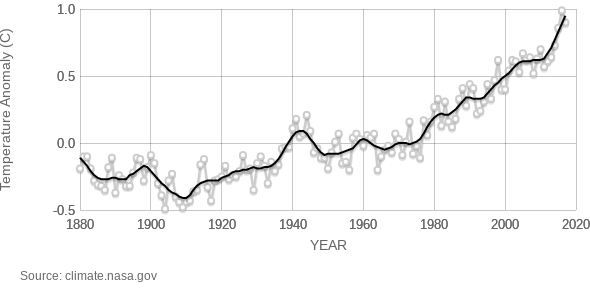
Today’s news is filled with the heatwave. Fifteen kids needed to be rescued, hiking in Maryland; and two were hospitalized. Here in Pennsylvania, PETA (People for the Ethical Treatment of Animals) is warning residents not to leave their pets out in the sun, and to walk dogs in the shade. Already this year, 28 dog deaths have been reported due to heat. Recent studies warn that, because of climate change, heatwaves will “drastically worse in the Northern Hemisphere.” Between 1998 and 2017, there were 160,000 heat-related deaths globally. The scientists suggest that record-breaking heat events are up to 7 times more likely to occur between 2021 to 2050.

How does this relate to what we do as educators? In 2019 Raffi wrote the song “Young People Marching” inspired by the work of Greta Thunberg:

Decades of lies, decades of denial\ Turned up the heat, engulfed us in fire\ Decades of obstruction, though people knew better\ Caused this climate emergency, now we gotta set ourselves free\ Of this climate emergency—climate emergency

“Engulfed in fire,” we recognize our responsibilities as music educators every bit as much as young people like Greta and professional musicians like Raffi. Unbound, for the most part, from the curricular dictates of distant global corporate interests and governments, we set our classroom’s direction in a way many Reading and Math teachers cannot. We aren't required to teach to a script. We don’t have to prepare children for weekly bubble tests; or to narrow possible futures to multiple-guess.

We teach music, and music is part of everything. Music education in schools is ecological if we allow it to be. If we take off our blinders.

More in this blog:
See Post 27: The American Politics of Climate Change
And also Post 53: An Intersectional Approach to Climate Justice

DS

Image:  https://upload.wikimedia.org/wikipedia/commons/thumb/9/97/Funeral_for_our_future_-_Melbourne_-_IMG_3634_%2831186598827%29.jpg/640px-Funeral_for_our_future_-_Melbourne_-_IMG_3634_%2831186598827%29.jpg
Picture
2 Comments

Hummingbird, hummingbird, where are you going?

7/27/2021

0 Comments

 
Picture
Post 107.

Today, I only offer a short post: a poem that I wrote this morning as a hummingbird floated in and out of my front-yard garden. How can we who teach music become and live eco-literacy if indeed, as I think, being ecologically literate is a way of life. Eco-literacy is more than merely a trendy (or more accurately untrendy) approach to teaching in schools. Echoing my thoughts, in a recent study, Dylan Adams and Gary Beauchamp champion children playing outside, which offers students "states of being and knowings that are not as accessible in schools." How does being ecologically literate every day--conscious of soil/of locality in its full ecological reality, and understanding how that soil connects to global issues--guide the ways we live life? How do we become life-sustaining educators and musicians? The peoples of earth we are born to be. It begins with being present in our bioregion, and our local ecosystem. Where else can we be?

Hummingbird, Hummingbird

Hummingbird, hummingbird, where are you going?
I planted this bee balm to welcome you here
If you choose to stay, I’ll sing you a song
I do not eat meat, you need not fear
But hummingbird hovers, and never stays long
Hummingbird, hummingbird, where are you going?

DS

Link to image: https://upload.wikimedia.org/wikipedia/commons/thumb/d/df/Hummingbird_moth%2C_Massachusetts.jpg/640px-Hummingbird_moth%2C_Massachusetts.jpg


0 Comments
<<Previous
Forward>>

    Eco-Literate Pedagogy Blog

    Daniel J. Shevock

    I am a music education philosopher. My scholarship blends creativity, ecology, and critique. I authored the books Eco-Literate Music Pedagogy, and, with Vince Bates, Music Lessons for a Living Planet: Ecomusicology for Young People, both published by Routledge. Through my blog at eco-literate.com I wrestle with ideas such as nature, sustainability, place, culture, God, race, gender, class, and beauty. I currently teach music at Central Mountain Middle School, in Mill Hall, PA, USA, in rural central Pennsylvania.

    Archives

    February 2026
    January 2026
    December 2025
    June 2025
    May 2025
    January 2025
    December 2024
    November 2024
    October 2024
    August 2024
    July 2024
    May 2024
    July 2023
    May 2023
    April 2023
    January 2023
    December 2022
    April 2022
    October 2021
    August 2021
    July 2021
    June 2021
    April 2021
    March 2021
    December 2019
    November 2019
    October 2019
    September 2019
    August 2019
    July 2019
    June 2019
    May 2019
    April 2019
    March 2019
    February 2019
    December 2018
    November 2018
    October 2018
    September 2018
    August 2018
    April 2017

    Categories

    All

    RSS Feed

Powered by Create your own unique website with customizable templates.